New AYOP member Unit2 helps companies move forward with AI
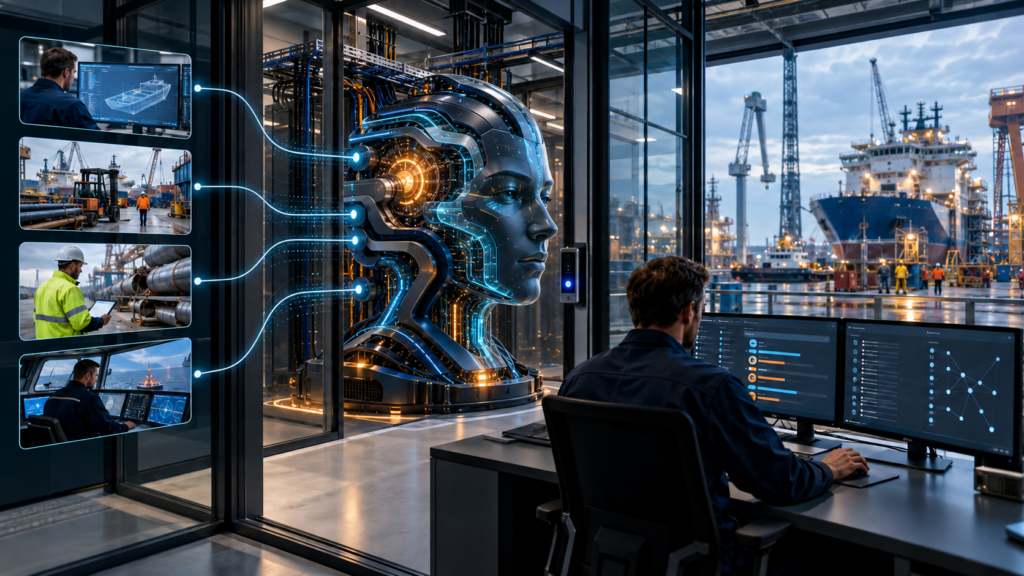
How do you deploy AI not just as a standalone tool, but as a full-fledged part of your business processes? That is exactly what new AYOP member Unit2 focuses on. The company helps organizations make processes smarter, step by step, using AI. Ronald Kraft and Niels van den Broek explain how they approach this, why employees play an important role in it, and the link to the maritime and offshore sector.
AI as part of the organization
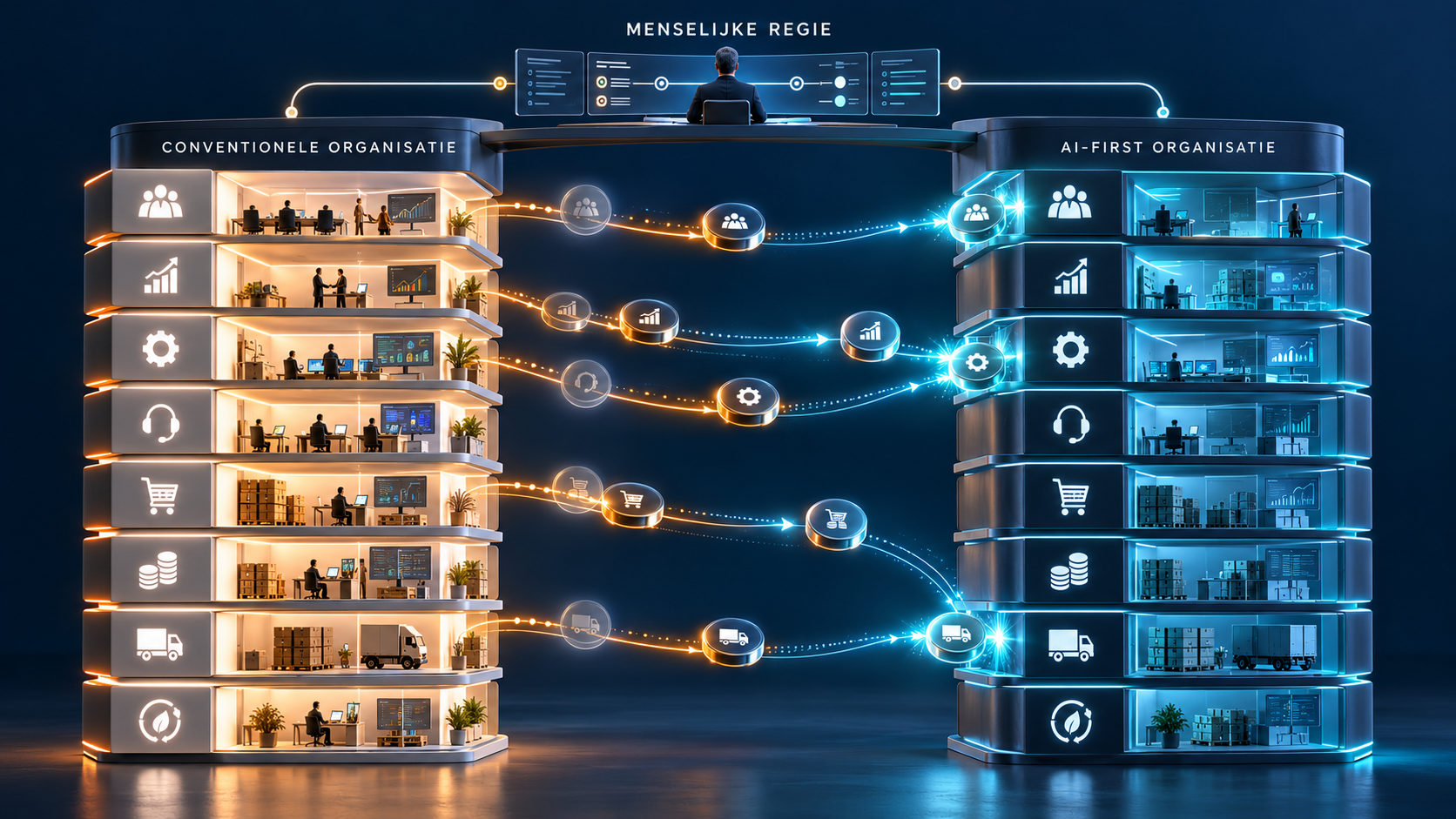
“An organization consists of all sorts of different layers, from purchasing and sales to project management, administration, and production,” says Ronald. “We look at where bottlenecks exist in those processes and where AI can support or take over tasks.”
Unit2 does this step by step. “We advise companies to build an AI organization alongside their existing organization, as it were. For example, we start with a bottleneck within purchasing and automate that process first. Subsequently, you can add more and more processes.”
Employees within an organization play an important role in this. “An AI solution is not something where you plug it in today and everything works tomorrow,” emphasizes Ronald. “You develop it together with the employees who know the process. Based on their feedback, we can continuously fine-tune the AI agents.”
Niels adds: “That is also where AI differs from traditional software. The latter can only work within fixed rules. AI can interpret different types of input and still arrive at the same desired output. To do this, however, you do need to thoroughly understand how a process works and what variables are involved.”
From an hour of research to a single overview
A project at Unique Lights (coincidentally also an AYOP member!) clearly demonstrates how this works in practice. There, lighting orders are checked before being processed further. For each order, checks are made to see, among other things, whether the order matches the quotation, whether the prices in the CRM system are correct, what agreements have been made with the customer, and whether the chosen product fits the application.
“That took about half an hour to an hour per order,” says Niels. “We have automated that process. As soon as an order comes in, the employee receives a single overview of the points of attention and discrepancies. This ensures that the employee sees immediately what he needs to look at.” Unit2 is now working with the company on the next steps. For instance, once approved, the order can be processed further, inventory checked, and orders to suppliers and communication regarding delivery times can be increasingly automated. “This way, you continue to build upon the existing process.”
From unmanned vessels to AI
The link with AYOP stems from the team’s background. “We come from the maritime world,” says Ronald. “We have experience with, among other things, unmanned vessels, shipbuilding, oil and gas, and offshore surveys in the North Sea.”
Working with unmanned vessels also brought with it a lot of data. “We stored that data and used it to train models. That is how we started with AI years ago. Subsequently, we saw opportunities within our own organization to structure processes more intelligently. Eventually, we incorporated that knowledge into a separate company: Unit2.”
Unit2 now wants to leverage that combination of AI knowledge and experience at sea for other companies in the sector. Ronald: “We know the maritime sector, the logistics, and working at sea. As a result, we understand which processes are at play there and where opportunities lie.”
Processing business data locally
According to Ronald, Unit2 distinguishes itself, among other things, by the way it handles business data. The company possesses its own computing power and can run AI models locally. “We can ensure that data remains within Europe or is even processed on a company’s own server network. You therefore do not need to send your business data to an external model for every application.”
Compliance also plays an important role in this. “We focus heavily on European AI legislation and the associated requirements,” says Ronald. “For certain applications, for example, it must be possible to retrieve what an AI agent has done and how a process unfolded.”
Moreover, according to Ronald, business data is becoming increasingly valuable. “If you have a lot of data, you can extract new insights from it. These can, in turn, help to organize processes more efficiently or develop new ideas.”
Sharing AI knowledge within the AYOP network
With membership in AYOP, Unit2 is actually returning to a familiar network. Ronald and Niels were already involved with AYOP through their previous maritime work. With Unit2, they see a clear connection once again. “With our knowledge of the maritime sector, working at sea, and the logistics involved, we believe we can effectively assist companies within the network with AI challenges,” says Ronald.
In addition, they do not just want to draw attention to their own services. “We want to make entrepreneurs, especially in North Holland, aware of what AI can mean for their organization. Whether they do so through us or not. The most important thing is that companies get started with it.”
Ronald also sees a shared interest in this: “If you take up this development together as a sector and share knowledge, you will ultimately be stronger.”
Companies that first want to discover where opportunities lie within their organization can complete an intake scan on the Unit2 website: https://unit2.ai/scan