Bridge of Europe: a circular future for wind energy
What is Bridge of Europe?
The aim of Bridge of Europe is to create a Dutch hub in the North Sea Canal area where onshore and offshore wind turbines are dismantled and processed according to the “R-Ladder”. Depending on the condition upon dismantling, the turbine can, for example, be overhauled and put back on the market (Refurbish), or dismantled into individual components that can be sold again (Repurpose). If there are no other options, the critical materials are removed from the turbine and reintroduced into the chain (Recycle). In this way, the material flows are maintained within Europe.
Why a centrale hub?
Bundling volumes at one location creates economies of scale: lower dismantling costs, reduced CO₂ emissions, and increased security of supply throughout the supply chain. Moreover, it ensures the conservation of critical raw materials within the Netherlands and Europe. This initiative therefore aligns with the Roadmap to Circular Wind from the Ministry of Climate and Green Growth and with European ambitions regarding Critical Raw Materials (CRM).
Which parties are involved in Bridge of Europe?
AYOP, together with ECHT, is spearheading the initiative, and together they form the working group. The steering committee consists of the Province of North Holland, the Municipality of Amsterdam, the Municipality of Velsen, the Port of Amsterdam, and the North Sea Canal Area Program Office. Many other companies in the sector have expressed their support for the initiative*. The realization of Bridge of Europe will ultimately be in the hands of a yet-to-be-formed consortium of parties that can play a role in the dismantling and processing process. But that point hasn’t been reached yet.
What is the status of Bridge of Europe?
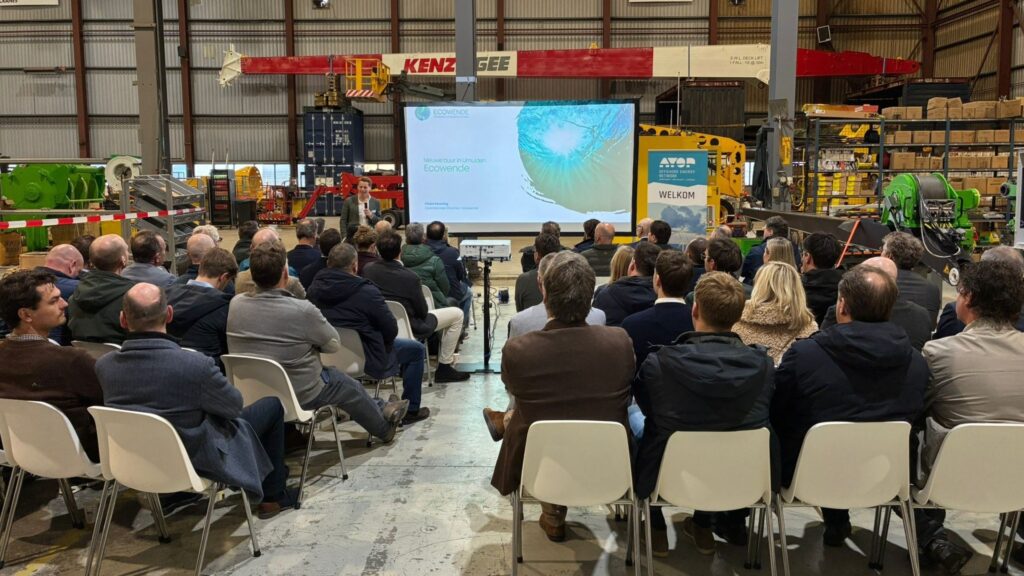
Bridge of Europe is currently in the research phase. This phase involves a volume analysis (is there enough for a good business case?) and determining the most favorable location for such a hub. The North Sea Canal Area is a strong contender. The region already has relevant infrastructure and experience in decommissioning and processing, making it a logical location for the hub. The first research reports are expected in April of this year. A kick-off event will take place on May 13, where the feasibility study will be presented to key stakeholders.
Following the initial research, in-depth studies will be conducted, ultimately leading to a blueprint for the national hub, identifying opportunities, requirements, and conditions. The first phase will run until 2028 and includes further studies and pilots. If all signals are green, the Bridge of Europe will start operating from 2028.
The role of AYOP
While ECHT leads the research, AYOP builds support. We meet with potentially interesting parties for the consortium, connect them, and foster collaborations. Richard Engelkes of AYOP is closely involved with Bridge of Europe and sees the initiative as a fantastic opportunity for North Holland: “There’s a good chance the hub will come to our region: dismantling and processing are second nature to us. This initiative will increase the region’s visibility, making it more attractive to do business and invest here. This also fosters innovation and creates opportunities for new chains, initiatives, and companies to establish themselves in the region. Moreover, it generates new business for established companies, including those within our network.”

Want to know more?
Want to learn more about Bridge of Europe? Richard is happy to tell you more. You can reach him at [email protected] or LinkedIn.
* Many companies in the sector have expressed their support for the Bridge of Europe initiative, including: EMR, Ministerie van Klimaat en Groene Groei (inmiddels Ministerie van Economische Zaken en Klimaat), NedZero, Tata Steel, TKI Offshore Energy, TMA Logistics, TNO, ONHN, RWE, Shell and Vattenfall.